Pattie Tuttle

Pattie Tuttle

Public health researcher and M.S. student, Infectious Diseases program, Diné College

Studying infectious disease in the Navajo Nation, from COVID-19 policy and mental health to the recent rise in syphilis.

See current research Email Pattie

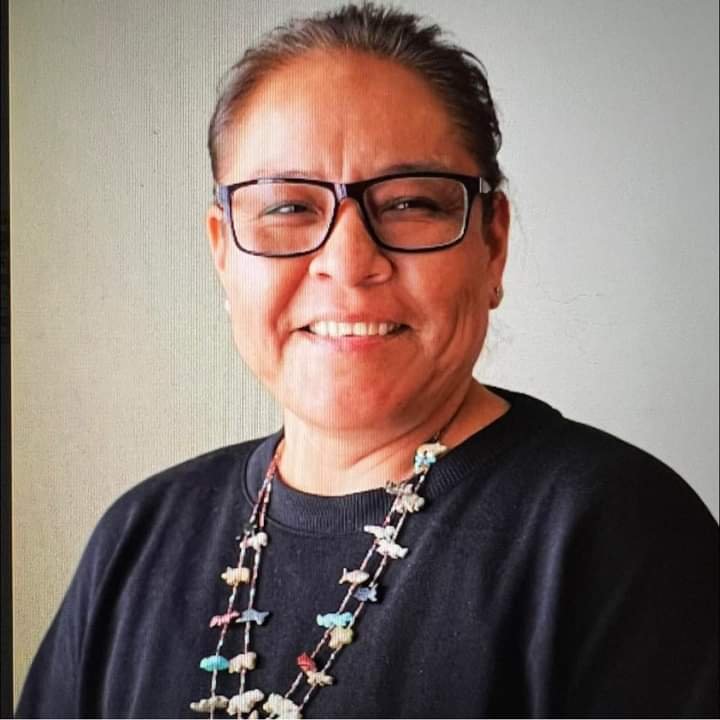
Portrait of Pattie Tuttle smiling, wearing glasses and a necklace of small carved animal beads

About

Pattie Tuttle is a public health researcher and graduate student in the Master of Science program in Infectious Diseases at Diné College in Tsaile, Arizona. Her research looks at how infectious disease moves through communities in the Navajo Nation, and at what community-driven, culturally grounded solutions can do to slow it.

Before graduate school, Pattie spent years in hands-on care: as a certified nursing assistant, dialysis technician, COVID-19 contact tracer, case manager, and Community Health Representative with the Navajo Department of Health’s sexually transmitted infection program. Reaching remote and elderly community members across the Western Agency showed her where the gaps in care are, and those gaps shape the questions she asks in her research.

She is also part of a mentorship program with Northern Arizona University.

Current research

An epidemiological study of the rise in syphilis in the Navajo Nation

Connection to land, systemic health risks, and community-driven solutions

Principal Investigator, Diné College M.S. program. Faculty supervisor: Dr. Shazia Hakim.

Syphilis is a sexually transmitted infection caused by the spiral-shaped bacterium Treponema pallidum. It spreads through direct contact with a syphilis sore during sex, and it can pass from a pregnant parent to a baby. Left untreated, it moves through stages that can damage the heart, brain and nerves, and many people live with it for years without knowing.

Between 2019 and 2023, the primary and secondary syphilis rate among American Indian and Alaska Native people nearly tripled, from 21.1 to 58.2 cases per 100,000. By 2023 it was the highest of any racial or ethnic group in the United States.

Pattie’s study asks why, and what can be done about it, through the lens of connection to land. A second part of the work, Exploring barriers to syphilis screening and the potential of confidential home self-testing in the Navajo Nation, looks at what keeps people from getting tested.

Illustration of a spiral-shaped Treponema pallidum bacterium
Treponema pallidum is a spirochete: a thin bacterium coiled like a corkscrew, too faint to see under an ordinary light microscope.

What community-driven solutions may bolster syphilis prevention and treatment in the Navajo Nation?

Research question

Primary and secondary syphilis rates by race and ethnicity, United States

Cases per 100,000 people, 2019–2023

Show the numbers
Primary and secondary syphilis rates per 100,000 people
Group20192020202120222023

American Indian and Alaska Native figures for 2019, 2022 and 2023 are as reported by the Indian Health Service. Other values are rounded readings of the CDC surveillance figure.

Source: CDC, Sexually Transmitted Infections Surveillance, 2023; Indian Health Service.

Syphilis through time

  1. 1495

    First recorded outbreak, among soldiers during the French invasion of Italy. From there it spread across Europe and the world.

  2. 1530

    An Italian physician and poet gives the disease the name “syphilis.”

  3. 1905

    Fritz Schaudinn and Erich Hoffmann identify Treponema pallidum at the Charité hospital in Berlin.

  4. 1910

    The first effective drug treatment becomes available.

  5. 1943

    Penicillin, discovered in 1928, is first used to cure syphilis. Penicillin G is still the first-line treatment for every stage today.

  6. 2023

    American Indian and Alaska Native communities have the highest rates of both primary and secondary syphilis and congenital syphilis in the country.

Hypotheses

Screening and early detection

A culturally tailored community education program on syphilis prevention, including correct condom use and regular testing, will reduce new infections.

Confidential self-testing

Over-the-counter syphilis self-tests, with direct access to confirmatory testing and treatment, will increase early diagnosis and reduce new cases among high-risk individuals. Testing at home gives people more privacy, which may make them more likely to seek care.

How the study works

Online survey

About 25 questions on SurveyMonkey for Diné College students and alumni, covering demographics and what people know about syphilis, testing and treatment.

Talking circles

Small online groups of three to five people. Talking circles, also called sharing or healing circles, bring people together to share teachings, listen and learn. Questions include how communities can spread awareness and how to remove the shame that keeps people from seeking treatment.

Lab work

Knowledge and laboratory testing at the microbiology lab on Diné College’s Tuba City campus.

Who can take part

Adults 18 and over, recruited through an online flyer to the Diné College community. All responses stay confidential, and no names appear in any report.

The study, phase by phase

The project follows the four phases of the Diné Educational Philosophy.

  1. Nitsáhákees Thinking

    Literature review and final research question.

  2. Nahat’á Planning

    Methods and measures finalized, and Diné College IRB approval.

  3. Iiná Living

    Recruitment, the online survey, talking circles and lab work.

  4. Siihasin Reflection

    Data analysis, the written report, and sharing results with the community.

Past projects

2020

Impacts of Navajo Nation policies on COVID-19

Co-Principal Investigator, Summer Research Enhancement Program (SREP), Diné College. June 19 to July 31, 2020.

In spring 2020 the Navajo Nation put strict policies in place to slow COVID-19: social distancing, required face masks in every building, and 57-hour weekend lockdowns starting April 10. By June 9, 2020, the Navajo Department of Health had reported 6,150 positive cases and 285 deaths.

This study asked how those policies affected people’s mental and emotional health, both the protection they gave and the stress and anxiety they caused, so public health teams would know where to focus services.

Methods
A 20-question community survey on demographics, knowledge of the coronavirus, policy, and mental and emotional health; interviews; a focus group; and photovoice. Interviews and the focus group ran over Zoom.
Where
Online and in person at grocery stores across the Western, Central and Eastern Agencies. Pattie collected data in Tuba City, Kayenta, Kaibito and Shonto.
Participants
About 60 enrolled Navajo Nation members, 18 and older, living in the Navajo Nation.
Team
Co-PIs Wacey Begay, Karianne Jones and Pattie Tuttle; mentors Dr. Carmella Kahn and Dr. Mark Bauer.

2022

Summer Research Enhancement Program

Remote research program, Diné College

A second SREP cohort, completed remotely.

2019

Mexican spotted owl acoustic monitoring

Tribal Colleges and Universities Program (TCUP) with the National Park Service, Chinle

Fieldwork in Canyon de Chelly: setting up sound monitors, riding UTVs through the canyon, and analyzing recordings for the calls of the threatened Mexican spotted owl. The work also covered the prairie dog colonies of the Navajo Nation and how they live.

Background

Education

  • 2026–

    M.S., Infectious Diseases program
    Diné College, expected 2028

  • 2023

    B.S., Public Health
    Diné College

  • 2019

    A.S., Public Health, and Public Health Certificate
    Diné College, with the University of Arizona

  • 2018

    Associate degree, Health Occupations
    Diné College

  • 2016

    Certified Nursing Assistant
    Navajo Technical University

  • 2011

    Associate degree, Lakota Studies
    Oglala Lakota College

Work history

  • 2026–

    Graduate intern, Infectious Diseases M.S. program
    Diné College

  • 2024–25

    Community Health Representative, STI program
    Navajo Department of Health, Inscription House. Home visits, vital signs, high-risk patient care, medication delivery and health education.

  • 2022–23

    Support Services Technician
    Lukachukai Community School

  • 2022

    Case Manager
    Utah Navajo Health System. Mental health assessments for at-risk young adults aged 16 to 25.

  • 2020–21

    COVID-19 contact tracer
    COPE and Diné College. Called positive patients across the Navajo Nation with isolation guidance and mental health resources.

  • 2012–14

    Dialysis technician and CNA
    Renal Care and Maricopa County, Phoenix. Care for patients with dementia, Parkinson’s, cancer and diabetes.

  • 2011–

    Home health caregiver
    Caring for her own family

Certifications

  • CITI Human Subjects Research, Social and Behavioral (IRB), 2020; refresher 2026
  • Contact Tracing, Johns Hopkins University, 2020
  • Navajo Nation Volunteer Certificate, 2020
  • Public Health Certificate, Diné College and University of Arizona, 2019
  • Certified Nursing Assistant, 2010 and 2016
  • CPR and First Aid

Presentations

  • “An epidemiological study of the rise in syphilis in the Navajo Nation: connection to land, systemic health risks, and community-driven solutions.” Diné College, 2026.
  • “Impacts of Navajo Nation policies on COVID-19.” SREP cohort, Diné College, 2020.

Community work

  • Health outreach in Kayenta, Tuba City, Kaibito, Inscription House and Navajo Mountain, 2024–2025
  • Student volunteer with the Navajo Nation during the pandemic, 2020
  • Volunteer, KILI Radio, Pine Ridge Reservation, 2011

Collaborators and mentors

  • Dr. Shazia HakimDean of STEM and instructor, Diné College. Faculty supervisor for the syphilis study.
  • Dr. Carmella KahnMentor, SREP 2020
  • Dr. Mark BauerMentor, SREP 2020
  • Wacey BegayCo-Principal Investigator, SREP 2020
  • Karianne JonesCo-Principal Investigator, SREP 2020

At home

Away from the lab, Pattie homesteads in a remote part of Monument Valley. Days there mean hauling water, chopping wood, keeping the dirt roads passable and caring for the animals. That connection to land runs through her research as well.

Photo to come: horned toad with corn pollen

Contact

Diné College
1 Circle Drive
Tsaile, AZ 86556

Scan to open this page on a phone, or download the code for posters and slides.

Leave a note

Questions about the research, or a comment after a presentation? Send Pattie a message.